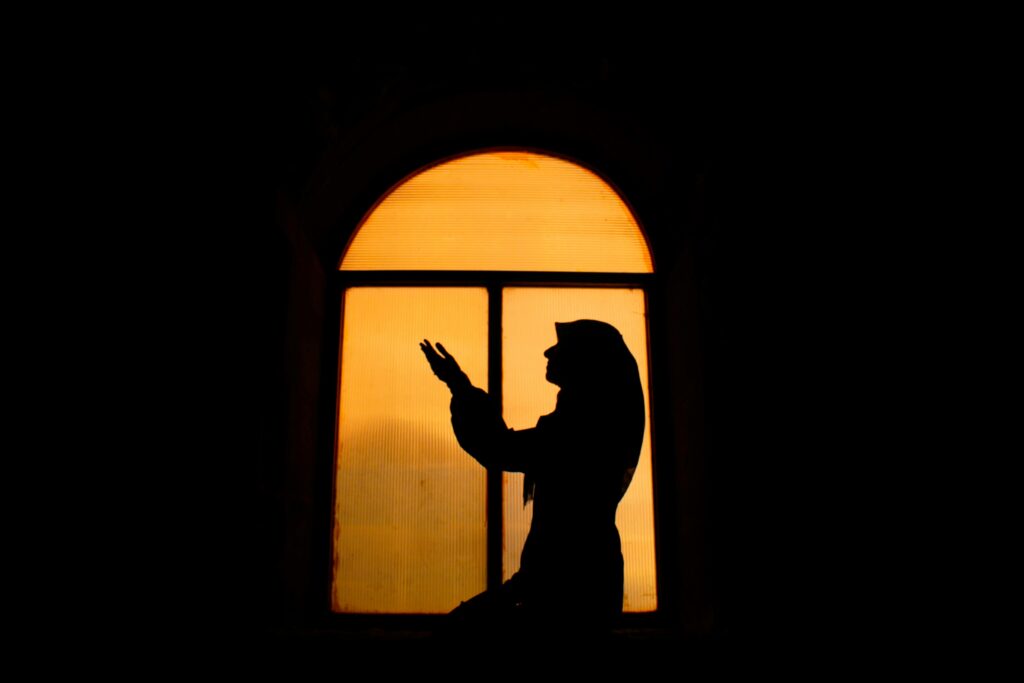
I lacked understanding on many grounds when it came to the principles of Christianity. At one point in my journey, I declared that I was not a Christian but did believe in God the Father, God the Son, and God the Holy Spirit.
I began practicing yoga as I saw it to bring together the elements of focus and movement. I did not understand that God had already created the meditative practice and the redirection of thought in Christian precepts.
While I was meditating with the Heavenly Father, He asked me, “Why do you practice yoga?” I answered Him, “Because, I find peace in the stillness and focus on you.” From there, He showed me the truth, that Yoga is a Hindu practice devoted to Hindu gods and if I respected all people as I say, then I should also understand how incredibly close the Hindu people are to their god as I am to mine. What I was seeking, was already within Him.
I denounced yoga in my life and over those who I taught and took up my Christian faith with the understanding of what it was. Before this, I hadn’t fully comprehended what Christianity was or that it was indeed a practice and not just a verbally expressed saying. Through my rededication, I started reading the Holy Bible from the beginning and what I found was a sweet surprise.
The Bible calls us to meditate. It is not just a light request but it is required to live a Christian life. This was surprising to me as I hadn’t heard of such things taught in any of the churches I attended.

What is meditation?
Meditation’s etymology derives from meanings such as contemplation, personal devotion, thought, reflection, to consider, and devout preoccupation (committed or devoted to religion or to religious duties/exercises) https://www.etymonline.com/word/meditation.
We all go from day to day performing the same tasks; some on autopilot, others requiring intense effort or thought. Once the day is over and we are in bed, we think of how the day was. We consider things we could have done differently or the actions that we give ourselves appreciation for. We may go into thought about how the next day will be and what things we will take care of in the coming day.
What is described above is meditation. Giving ourselves over to our thoughts and allowing them to direct the course of our behavior. The meditation that God calls us to is similar with the exception that we focus on Him instead of our woes and concerns. Jesus advised us not to worry about the morrow because it has troubles of its own (Matthew 6:34). Instead, we are called to meditate on the word and actions of The Most High God.

How should you practice meditation?
Meditation has been deeply embedded into mainstream media. It is displayed as sitting in a room completely quiet and ridding your mind of all thoughts to reach apotheosis (elevation to divine status).
Anyone (such as myself) who have tried to rid the mind of all thoughts during meditation, will find that it is difficult as all outside forces bring any and everything to your remembrance. In some cases, a meditation teacher will speak at regular intervals to assist in quieting the mind and redirecting thought.
The Bible calls us to meditate in ways that we can practice without the assistance of a guided meditation teacher. Joshua 1:8 states that “The Book of the Law shall not depart from your mouth, but you shall meditate on it day and night.” This guides us in one form of meditation by rolling over the word of God in our mind.
Maybe you are going through depression in which you can roll over Psalms 42:11 “Why my soul, are you downcast? Why so disturbed within me? Put your hope in God, for I will yet praise Him, my Savior and my God.”
Perhaps anger is the thorn in your side, you can meditate on Proverbs 16:32 “Whoever is slow to anger is better than the mighty, and he who rules his spirit than he who takes a city.”
Fear is also one of the top 5 human emotions and we all struggle with feelings of fear from time to time. Joshua 1:9 is a meditative verse in reciting “Have I not commanded you? Be strong and courageous. Do not be frightened, and do not be dismayed, for the Lord your God is with you wherever you go.”
In your life, you may have committed an act that caused shame, Zephaniah 3:19 calls” I will change their shame into praise and renown in all the earth.”
Psalms 145 narrates David’s expression that he will meditate on God’s glorious splendor and wondrous works.
This guides us in understanding that we should meditate in gratitude for the work God has done in our life. So many times, we consider the things we need to do, the things we haven’t done and the things we shouldn’t have. We also consider the things we don’t have that we want, we compare ourselves to what we see on social media, and this scripture guides us into understanding, that we must take a moment to reflect on the goodness in our lives. The hand of God in our movements and well being and to keep gratitude in our meditative practices.
Meditation is a practice that assists in the renewal of the mind. Coupling meditation with reading the word and praying will help us achieve what one meditative session without any of the aforementioned cannot, a change in our existence.